CZ Bespoke Carpentry logo

Services · Wallingford, Oxfordshire

2nd Fix Carpentry in Wallingford and South Oxfordshire

Doors, skirting, architrave, staircases and panelling fitted to a standard that stands up close, because second fix is the work everybody sees and nobody can hide.

Ten years on the tools · NVQ Level 2 qualified · fixed-price quote back within 72 hours

  • 10 years

    on the tools in finish carpentry

  • £2m

    public liability insurance

  • NVQ Level 2

    carpentry and joinery qualified

  • 72 hours

    to a written fixed-price quote

  • CAD drawings

    approved before anything is built

Overview

What second fix carpentry covers

Second fix carpentry is everything that goes in after the plastering: door linings and doors, ironmongery, skirting and architrave, window boards, staircases and balustrades, wall panelling, boxing-in, loft hatches, shelving and any other visible timber work. First fix is structural and hidden; second fix is decorative and permanent, and it is judged from a foot away.

It is the stage where a renovation either reads as finished or reads as nearly finished. Mitres that close, scribes that follow the wall, doors that swing to a consistent gap and stay where you leave them, skirting that meets architrave cleanly; that is what people mean when they say a house feels well built.

We handle second fix as a package across whole houses, single rooms or specific elements. Because the same person sets out the doors, the skirting and the panelling, the detailing is consistent from room to room rather than changing with whoever was on site that week.

Second fix has almost no tolerance for error. A door hung 2mm out of square shows a tapering gap along its full height. An architrave mitre that opens 1mm will keep opening as the timber moves. This is measured, patient work, and it looks effortless only when it is done by someone who has done thousands of them.

Who it's for

  • Homeowners renovating a house, extension or loft conversion
  • Anyone replacing tired doors, skirting and architrave throughout a property
  • Clients wanting panelling, a new staircase balustrade or upgraded internal joinery
  • Builders and project managers needing a reliable finishing carpenter

When it's needed

  • Plastering is done and the property is ready for the finishing stage
  • Doors are binding, dropping or no longer latching after settlement or new flooring
  • Skirting and architrave are damaged, painted solid or in a profile that no longer suits the house
  • A staircase feels unsafe, creaks badly or needs a new balustrade to current standards

The risk

Why poor second fix ruins good building work

You can spend a fortune on a structural opening, a new floor and a re-plaster, and lose the entire impression to a badly hung door. Second fix is the last thing done and the first thing seen, so faults here get attributed to the whole project.

The faults are permanent in practice. Once architrave is fixed, filled and painted, correcting an open mitre means removing and replacing the set. Once a door lining is fitted out of plumb, no amount of hinge adjustment gives you a parallel gap. Once a staircase spindle is fixed at the wrong spacing, the whole run has to come off.

There are safety issues too. Balustrade spindle spacing, handrail height and going and rise on a staircase are all covered by building regulations, and a balustrade that fails under load is a genuine hazard in a family home.

The other cost is time. Doors that bind, latches that miss the keep, sticking drawers and rattling handles are small daily irritations that never get fixed because getting a carpenter back for two hours' work is harder than living with it.

Common mistakes we're called in to fix

  • Hanging doors before the floor finish is laid, then discovering there is no clearance
  • Fixing architrave before the lining is checked for plumb and square
  • Cutting skirting mitres on internal corners instead of scribing them, so they open as the timber moves
  • Nailing everything with no adhesive and relying on filler to close the joints
  • Ignoring balustrade spindle spacing and handrail height requirements

Our process

How a 2nd fix carpentry project runs, step by step

  1. 1

    Survey and schedule

    We walk the property, list every element, doors, linings, ironmongery, skirting runs, architrave sets, window boards, staircase and panelling, and check plumb, square and floor levels at each opening.

  2. 2

    Specification and fixed-price quote

    You get a clear written scope with profiles, materials and ironmongery agreed, and a fixed-price quote returned within 72 hours. Where a profile needs matching to existing joinery, we take a template.

  3. 3

    Setting out and installation

    Linings are fixed plumb and square, doors hung and gapped, skirting scribed on internal corners and mitred externally, architrave set to a consistent margin, and panelling set out from a centre line so the room reads symmetrically.

  4. 4

    Ironmongery and adjustment

    Hinges, latches, handles, locks and door stops fitted and adjusted so every door closes cleanly, latches first time and stays where it is put.

  5. 5

    Snagging and handover

    We go round every opening and every run, adjust anything that needs it, fill and sand ready for decoration, clear the site and remove waste.

What you get

The difference this makes, in specifics

  • Doors that close first time and stay right

    Linings fixed plumb and square, consistent gaps, hinges set correctly and latches aligned to the keep, so no door needs a shoulder or a lift to shut.

  • Joints that stay closed

    Scribed internal corners, glued and pinned mitres and correct fixing patterns mean the joints do not open the first time the heating comes on.

  • Consistent detailing throughout the house

    One carpenter setting out the whole property means the architrave margin, skirting height and door gaps read the same in every room.

  • Staircases and balustrades done to standard

    Spindle spacing, handrail height and fixings are set to current building regulation requirements, not to whatever looks about right.

  • Ready for the decorator

    Everything is filled, sanded and left in a state the decorator can work with immediately, so the programme does not stall at the last stage.

  • Insured and qualified

    £2m public liability insurance, NVQ Level 2 in carpentry and joinery, and ten years on the tools.

In detail

Elements, materials and methods

Second fix covers a wide range of components. This is what we fit and how the choices affect the result.

Doors, linings and ironmongery

Internal doors come as hollow-core, solid-core engineered, and solid timber. Solid-core doors are noticeably heavier and better acoustically, which matters for home offices and bedrooms, and they need three hinges and a lining fixed properly to carry the weight. Fire doors have their own requirements for intumescent strips, closers and hinge specification, and are fitted to the manufacturer's instructions.

Linings are the part that decides everything. A lining fixed plumb, square and with no twist gives a door that shuts on a parallel gap; a racked lining never will. Ironmongery is fitted after the door is hung and adjusted, with latch and keep aligned rather than forced.

  • Hollow-core, solid-core engineered, solid timber and fire doors
  • Door linings, casings and stops fitted plumb and square
  • Hinges, latches, locks, handles, closers and stops
  • Bi-fold, pocket and sliding door systems

Skirting, architrave and mouldings

Profiles range from plain chamfered and rounded stock to ogee, torus and deep Victorian sections, in MDF for painted finishes or hardwood and softwood where timber is being stained. In period houses we can match an existing profile by taking a template and having stock run to match, so a new room does not announce itself.

Method matters more than material. Internal corners are scribed, not mitred: a scribe holds its line as timber moves and a mitre opens. External corners are mitred, glued and pinned. Long walls are jointed with a mitred scarf rather than a butt joint. Architrave is set to a consistent margin off the lining edge all round.

Staircases and balustrades

We fit new staircases, replace balustrades, change newel posts, spindles and handrails, and cure creaks in existing stairs by re-wedging, blocking and screwing treads and risers from beneath where access allows.

Balustrade work is governed by building regulations, spindle spacing must not allow a 100mm sphere to pass, and handrail heights are set from the pitch line and landing level. Newels are fixed into the structure, not just to the string, because a balustrade is only as strong as its posts.

Panelling and decorative joinery

Wall panelling is the fastest way to change how a hallway, bedroom or dining room reads. Options include shaker panelling, tongue-and-groove, board and batten, and full traditional raised panelling. It is always set out from a centre line with the panel widths equalised across the wall, so the run does not end on a sliver in the corner.

The same approach applies to window seats, alcove shelving, boxing-in of pipework and soil stacks, radiator covers with proper air paths, and loft hatch replacement.

Sequence with other trades

Second fix comes after plastering and after first fix electrics and plumbing, and usually before or alongside final decoration. Flooring position in the programme changes door clearances, so we confirm the finished floor build-up before hanging anything.

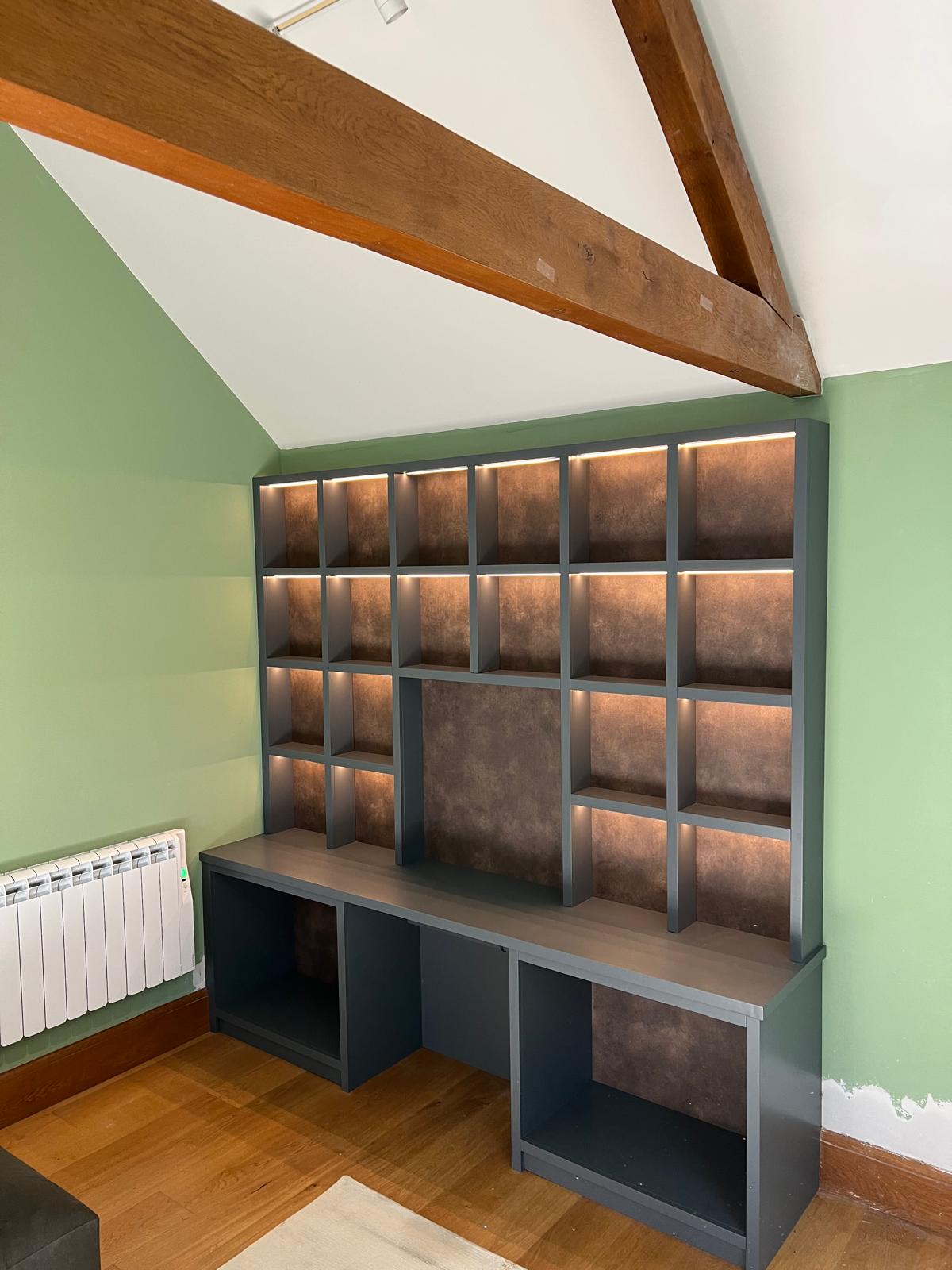
Where the same project includes a kitchen fit, fitted bedrooms or a media unit, running the second fix through the same team keeps the mouldings, margins and finish consistent across all of it.

Questions

2nd Fix Carpentry: the questions we're asked most

How much does second fix carpentry cost?
It is priced by scope, number of doors and linings, metres of skirting and architrave, staircase work, panelling area and ironmongery. We survey, schedule the work and return a written fixed-price quote within 72 hours.
How long does a whole-house second fix take?
A typical three or four bedroom house takes around one to two weeks depending on door count, panelling and staircase work. Single rooms and individual elements are usually one to three days.
Can you match existing skirting and architrave profiles?
Yes. We take a template of the existing profile and have matching stock run, so extensions and new rooms read as part of the original house.
Do you supply the doors and mouldings or do I?
Either. Many clients buy their own doors and ironmongery; we are happy to fit supplied materials or to source them, whichever you prefer. It is agreed at quote stage.
Can you fix doors that stick, drop or will not latch?
Yes. Most cases are lining movement, hinge wear or a floor covering change, and are corrected by re-setting the lining, adjusting or replacing hinges and realigning the latch and keep.
Is your staircase and balustrade work to building regulations?
Yes, spindle spacing, handrail height and newel fixings are set to current requirements, and we will tell you at survey stage if an existing arrangement does not comply.
Do you do the filling and sanding for the decorator?
Yes. Everything is filled, sanded and left ready to paint so the decorator can start without remedial work.
Do you offer a guarantee?
There is no formal written guarantee at present. We carry £2m public liability insurance, Corey is NVQ Level 2 qualified with ten years' experience, and snagging is completed before handover.
Do you work with builders and project managers?
Yes, regularly. We can price against a schedule, work to a programme and coordinate with the other trades on site.
Which areas do you cover?
Wallingford, Goring, Streatley, Moulsford, Cholsey, Ipsden, Harwell, Henley, Woodcote, Didcot, Abingdon, Benson, Crowmarsh Gifford, Watlington, Nettlebed and the surrounding South Oxfordshire villages.

Get the finishing stage done properly

Send us a room list or a schedule of works. We will survey, agree the profiles and ironmongery and return a fixed-price quote within 72 hours.

Corey Holleran · NVQ Level 2 qualified · £2m public liability insurance · quotes back within 72 hours

Call CoreyFree Quote