CZ Bespoke Carpentry logo

Services · Wallingford, Oxfordshire

General Carpentry and Joinery in Wallingford, Oxfordshire

All aspects of carpentry from a single sticking door to a full house of joinery, priced fixed in writing within 72 hours, so you know the number before anyone starts.

NVQ Level 2 qualified · £2m public liability insurance · ten years on the tools

  • 10 years

    on the tools in finish carpentry

  • £2m

    public liability insurance

  • NVQ Level 2

    carpentry and joinery qualified

  • 72 hours

    to a written fixed-price quote

  • CAD drawings

    approved before anything is built

Overview

What we cover

General carpentry is the everyday work that keeps a house functioning and looking right: hanging and repairing doors, replacing skirting and architrave, fitting loft hatches and shelving, building stud walls, boxing in pipework, repairing staircases, fitting window boards, decking, gates, garden structures and the hundred smaller jobs that accumulate on a list.

We take on both ends of the scale. A half-day of repairs is a legitimate job, and so is a full renovation package where we handle first fix, second fix and fitted furniture from start to finish. The difference is scope, not standard.

The specialism is finish carpentry and fitted furniture, and that discipline carries into the general work. A door hung on a repair visit is set out the same way as one hung on a full house fit-out.

Carpentry looks simple until you try it in a house where nothing is square. The skill is in setting out, finding the datum, deciding where the discrepancy goes, and cutting once. That is what stops a job looking homemade.

Who it's for

  • Homeowners with a list of jobs that never quite gets done
  • People renovating who need a carpenter across several stages
  • Landlords and letting agents needing reliable repairs between tenancies
  • Builders and project managers needing a qualified carpenter on a programme

When it's needed

  • Doors stick, drop or fail to latch after settlement or a new floor
  • Skirting, architrave or window boards are damaged, rotten or dated
  • You need a stud wall, loft hatch, shelving or storage built in
  • A staircase creaks, a gate has dropped, or decking has become unsafe

The risk

Small jobs that get expensive

Carpentry problems compound. A door that binds gets forced, and forcing it pulls the hinge screws, which enlarges the holes, which drops the door further. A rotten section of window board or external timber lets water sit against the structure behind it, and what starts as a £150 repair becomes a rebuild. A creaking stair tread that is left is a tread with a failed glue joint, and eventually a loose one.

The second problem is accumulation. Most households have a list: the airing cupboard door, the loose banister, the shelf that was never put up, the skirting the plumber cut. Individually none of them justifies a call-out, so nothing gets done for years, and the house slowly feels less cared for.

The third is bad DIY. Doors screwed straight into plasterboard with no fixing. Shelves on brackets rated for a fraction of the load. Skirting nailed over a damp wall. Fixing someone else's shortcut always costs more than doing the job once.

And for landlords, a carpentry fault between tenancies is void time, which is measurable money.

Common mistakes we're called in to fix

  • Packing a hinge instead of correcting a lining that has moved
  • Fixing into plasterboard without a suitable cavity or timber fixing
  • Using internal-grade timber or MDF for external or damp locations
  • Cutting a structural member to route a pipe or cable
  • Leaving external timber unsealed at cut ends, where rot always starts

Our process

How a general carpentry project runs, step by step

  1. 1

    Enquiry and scoping

    Tell us the list. For small jobs, photos and measurements are often enough to price; for anything larger we visit and survey properly.

  2. 2

    Fixed-price quote in 72 hours

    You get a written fixed-price quote within 72 hours setting out exactly what is included, what materials are specified and who is supplying them.

  3. 3

    Preparation and protection

    Floors and routes sheeted, dust extraction on tools, and the work area set up so the rest of the house carries on as normal.

  4. 4

    Carrying out the work

    Set out from a datum, cut once, fix properly with the right fixings for the substrate, and seal or prime anything that needs it before it goes in.

  5. 5

    Check, clear and hand over

    Everything is tested in use, doors swung, drawers run, loads checked, then filled and sanded where needed, the area cleared and the waste taken away.

What you get

The difference this makes, in specifics

  • One carpenter for the whole list

    Rather than chasing three trades for five small jobs, the list gets done in one visit with one price.

  • Fixed price before we start

    Written fixed-price quotes returned within 72 hours, no hourly rate creeping through the afternoon.

  • Repairs that hold

    Correct fixings for the substrate, sealed end grain on external work and proper setting out mean the same fault does not come back next year.

  • Finish-carpentry standards on ordinary work

    The same standard applied to a repair visit as to a full fitted bedroom, because the difference between the two is scope, not care.

  • Clean, contained working

    Dust extraction, sheeted routes, tidy-down every day and waste removed at the end.

  • Qualified and insured

    NVQ Level 2 in carpentry and joinery, £2m public liability insurance, ten years of experience.

In detail

Types of work, materials and methods

General carpentry spans structural first fix through to fine finishing. Here is the range and the thinking behind each.

First fix work

First fix is the structural, hidden carpentry: stud partitions, noggins, floor joists and joist repairs, door lining installation, roof timbers, and battening and boarding. The priority is strength, square and plumb, because everything visible later is set out from it.

Stud walls are built from treated or kiln-dried softwood at correct centres with noggins for board edges and for anything that will later be fixed to the wall: a radiator, a TV bracket, a handrail. Adding a noggin costs seconds during build and saves an hour of cavity fixings later.

  • Stud partitions, noggins and boarding
  • Floor joist repairs and levelling
  • Door lining and casing installation
  • Battening, framing and boxing structures

Second fix and repairs

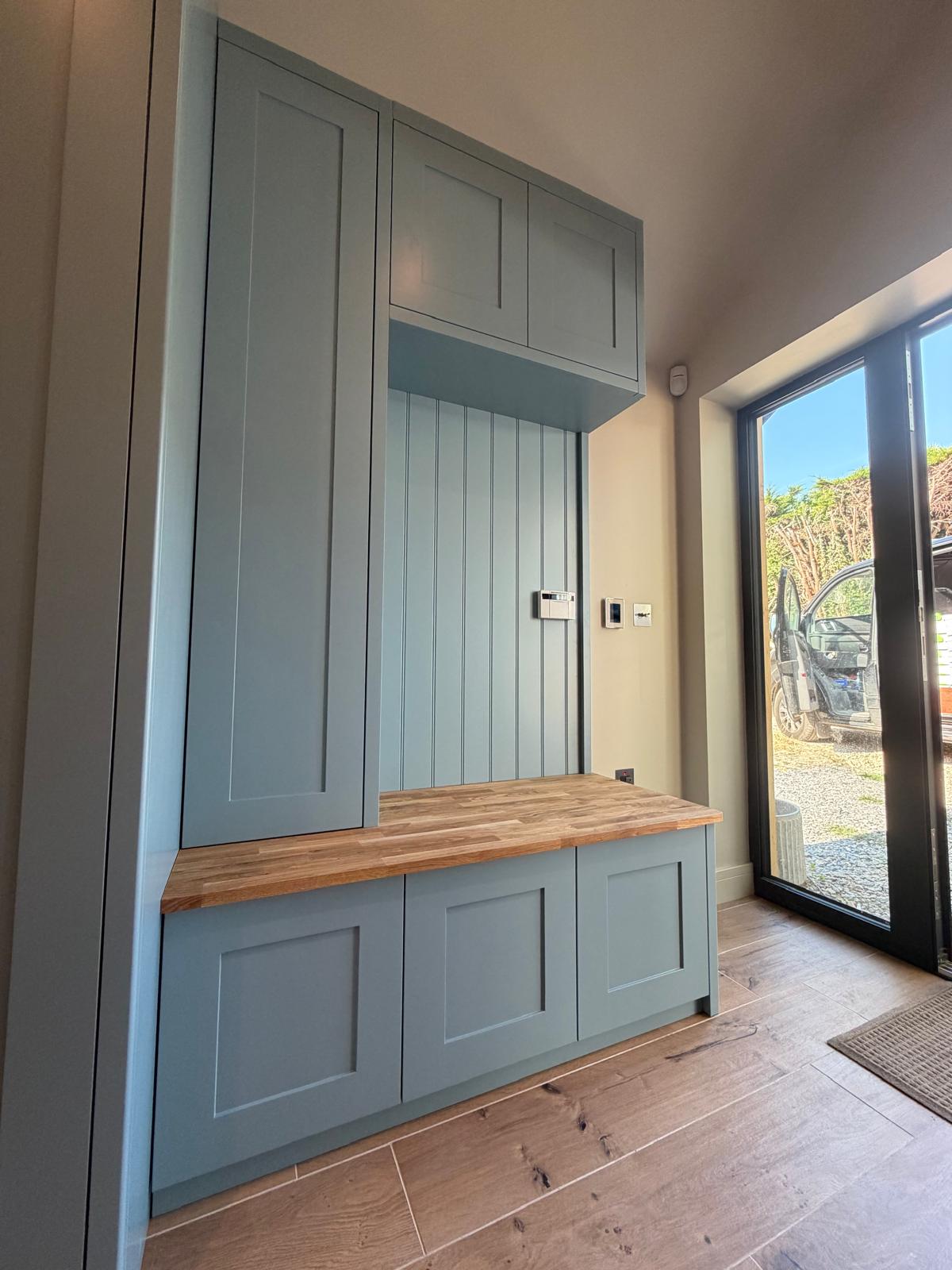
Doors hung and adjusted, ironmongery fitted, skirting and architrave replaced, window boards, shelving, loft hatches, airing cupboards, understairs storage and boxing-in. Repairs cover sticking and dropped doors, failed hinges, damaged mouldings, creaking stairs and loose banisters.

For repairs the diagnosis matters as much as the fix. A dropped door is usually a lining or hinge problem rather than a door problem, and replacing the door without correcting the lining just moves the fault.

External and garden carpentry

Decking, fencing, gates, pergolas, sheds and garden structures. Externally the rules change: everything is in treated timber or a naturally durable species, end grain is sealed at every cut, fixings are stainless or suitably coated, and timber is kept clear of the ground with a drainage path beneath it.

Most external timber failures are avoidable; they start at an unsealed cut end or a post in direct ground contact without protection.

Materials and fixings

Softwood for structural and hidden work, MDF for painted internal mouldings and joinery, moisture-resistant grades in bathrooms, utilities and boot rooms, hardwood for stained finishes and high-wear surfaces, treated timber outside.

Fixings are chosen for the substrate: masonry fixings into brick and block, timber screws into stud, and proper cavity fixings or timber grounds in plasterboard. Fixing a heavy item into unsupported plasterboard is the single most common cause of things falling off walls.

Residential and light commercial

Domestic work is the majority, private homes across Wallingford and South Oxfordshire, often occupied while we work. Light commercial work such as offices, studios and small retail units follows the same standards with more emphasis on programme and on surfaces that take heavy traffic.

Where a job spills into other trades, electrics, plumbing, plastering, decorating, we coordinate through trusted trades so the sequence works and nothing has to be undone.

Questions

General Carpentry: the questions we're asked most

Do you take on small carpentry jobs?
Yes. A half-day list of repairs is a perfectly normal job. Send photos and measurements and we can often price it without a visit.
How much do you charge?
We quote fixed prices per job rather than working to an open hourly rate, and the written quote comes back within 72 hours so you know the figure before anything starts.
How quickly can you attend?
Quotes come back within 72 hours. Start dates depend on the current schedule, small repair work usually books in far sooner than bespoke joinery, which runs to around a six-week lead time because it is made in the workshop first.
Are you qualified and insured?
Corey holds an NVQ Level 2 in carpentry and joinery, has ten years of experience, and CZ Bespoke Carpentry carries £2m public liability insurance.
Do you supply materials?
We can supply materials or fit materials you have bought, whichever you prefer. It is confirmed in the quote so there is no ambiguity.
Can you fix a door that will not close properly?
Yes, and usually on a single visit. The cause is normally lining movement, hinge wear or a change in floor covering, all of which are corrected by re-setting the lining, adjusting the hinges and realigning the latch.
Do you do emergency or urgent work?
We are not a 24-hour emergency service, but we work seven days a week between 7:30am and 5:00pm and will do what we can to fit in urgent security or weather-related repairs.
Do you offer a guarantee?
There is no formal written guarantee at present. What you get is qualified, insured workmanship, a fixed price agreed in writing and the work checked with you before we leave.
Do you work with builders and landlords?
Yes. We price against schedules, work to programmes and handle between-tenancy repair lists.
Which areas do you cover?
Wallingford, Goring, Streatley, Moulsford, Cholsey, Ipsden, Harwell, Henley, Woodcote, Didcot, Abingdon, Benson, Crowmarsh Gifford, Watlington, Nettlebed and the surrounding South Oxfordshire villages.

Get your carpentry list priced this week

Send the list, or photos of the problem. We will come back with a written fixed price within 72 hours.

Corey Holleran · NVQ Level 2 qualified · £2m public liability insurance · quotes back within 72 hours

Call CoreyFree Quote