CZ Bespoke Carpentry logo

Services · Wallingford, Oxfordshire

Hand-Cut Roofs and GRP Flat Roofing in Wallingford, Oxfordshire

Roof carpentry set out square and covered to shed water properly, because a roof is a carpentry problem first and a covering problem second.

NVQ Level 2 qualified carpenter · £2m public liability insurance · fixed price within 72 hours

  • 10 years

    on the tools in finish carpentry

  • £2m

    public liability insurance

  • NVQ Level 2

    carpentry and joinery qualified

  • 72 hours

    to a written fixed-price quote

  • CAD drawings

    approved before anything is built

Overview

What we do on roofs

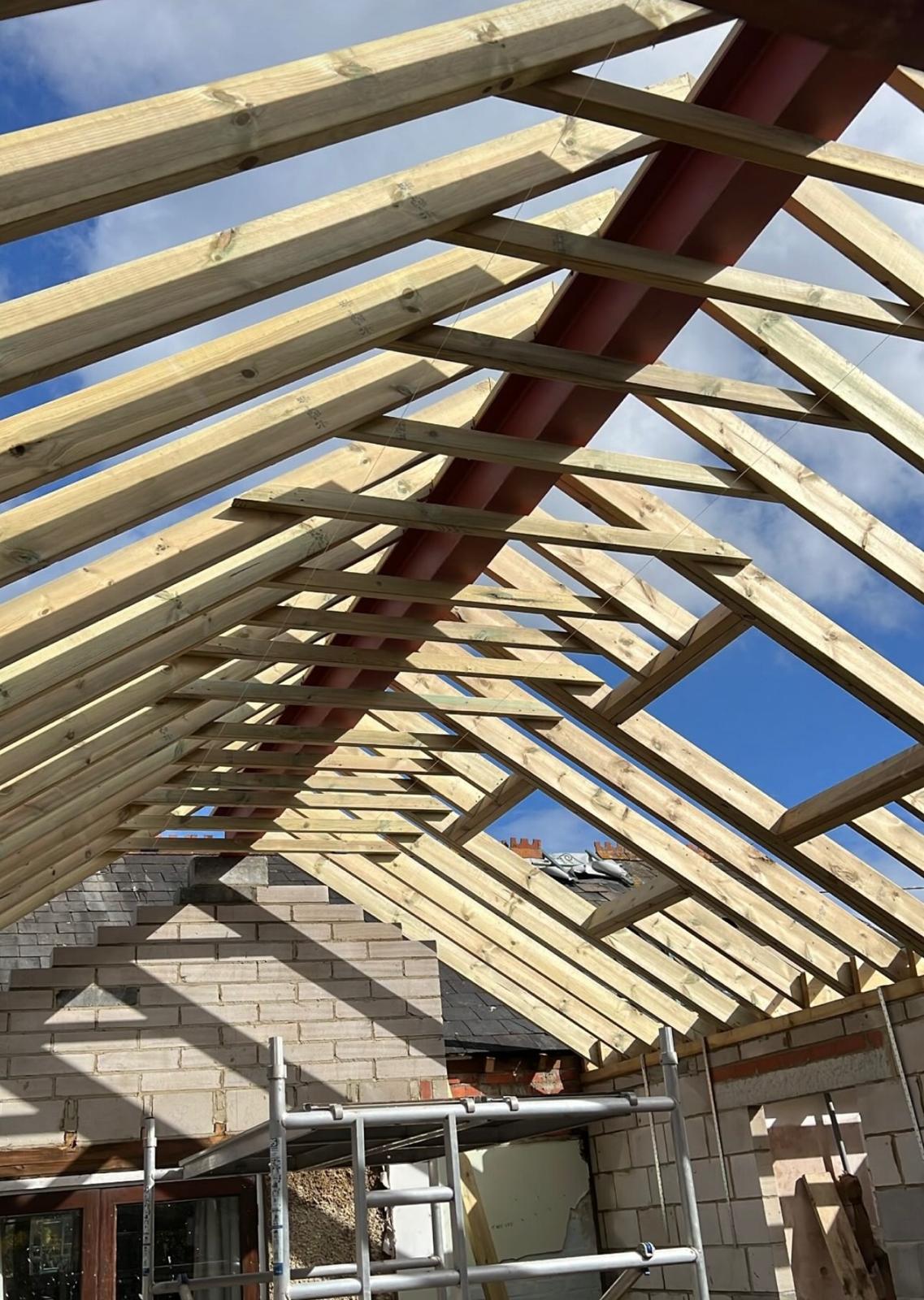
Our roofing work is carpentry-led: hand-cut roof structures for extensions, dormers, porches, garages and garden rooms, and GRP resin flat roofing for flat and low-pitch areas. Hand-cutting means the roof is set out and cut on site rather than delivered as trusses, which is what you need on extensions, awkward junctions and any roof that has to marry into an existing structure.

GRP, glass-reinforced polyester, is a liquid resin and glass matting system laid over a ply deck to form a single seamless, jointless membrane with bonded trims. There are no seams to fail, which is the usual weak point of older felt roofs.

The carpentry underneath matters more than the covering. Falls, deck flatness, edge detailing and upstands decide whether water leaves the roof or sits on it. That is why we treat the structure as the main job.

A roof has one job and no tolerance. Fall, deck condition and edge detail decide the outcome; get the falls wrong and the covering, however expensive, is holding back standing water for the rest of its life.

Who it's for

  • Homeowners building an extension, dormer, porch or garage roof
  • Anyone with a failing felt flat roof over an extension, garage or dormer
  • Garden room and outbuilding projects needing a warm flat roof
  • Renovators needing roof structure alterations as part of a wider project

When it's needed

  • A flat roof is blistering, cracking, ponding water or leaking at the seams
  • New build or extension work needs a hand-cut roof structure
  • A dormer or porch is being added and the roof has to tie into the existing pitch
  • Roof timbers show signs of sagging, splitting or water damage

The risk

What a failing roof actually costs

Roof water does not stay on the roof. It runs along joists and follows the path of least resistance, which is why a leak that appears above a kitchen window can originate three metres away. By the time a stain shows on a ceiling, the deck, insulation and often the timbers above have been wet for months.

Wet insulation stops insulating, so heating costs rise before anything is visibly wrong. Wet timber becomes an environment for rot and, in the right conditions, for damp-related decay in the structure. Replacing a deck and a few rafters is a manageable job; replacing a rotted structure and the ceiling below it is not.

Old felt roofs fail in a predictable order: the surface cracks under UV, water gets to the seams, the seams lift, and the deck below softens. Patching a felt roof buys a season. Ponding accelerates all of it, standing water is what turns a small defect into a failure.

There is also insurance and saleability. Persistent damp staining is one of the first things a surveyor flags, and it reduces both what a buyer will pay and how quickly they will commit.

Common mistakes we're called in to fix

  • Laying a new covering over a soft or damaged deck instead of replacing it
  • Building a flat roof with insufficient fall, so water ponds rather than running to the outlet
  • Patching a felt roof repeatedly instead of addressing why it is failing
  • Skimping on edge trims, drips and upstands, where most flat roofs actually leak
  • Ignoring rainwater goods, so the roof drains onto walls, bases and cladding

Our process

How a roofing project runs, step by step

  1. 1

    Inspection and diagnosis

    We inspect the roof and, where possible, the structure and ceiling below, and identify whether the problem is the covering, the falls, the deck, the edge details or the rainwater goods.

  2. 2

    Specification and fixed-price quote

    You get a written scope, structure, deck, insulation, covering system, trims and rainwater goods, with a fixed-price quote returned within 72 hours, including any deck or timber replacement we can foresee.

  3. 3

    Strip-out and structural work

    Old covering and deck removed, timbers inspected and any rotten or damaged members replaced, falls set or corrected with firrings, and the roof made ready.

  4. 4

    Deck, insulation and covering

    New ply deck laid and fixed, insulation installed to the specified build-up, then GRP resin and matting applied with bonded trims and upstands to form a seamless membrane. Hand-cut pitched roofs are cut, set out and covered to the agreed specification.

  5. 5

    Testing, weathering and handover

    Falls checked, outlets and rainwater goods tested with water, upstands and abutments checked, site cleared and waste removed, then a walk-round with you.

What you get

The difference this makes, in specifics

  • Seamless GRP with no joints to fail

    Resin and matting cure into a single continuous membrane with bonded trims, removing the seam failures that finish most felt roofs.

  • Water that actually leaves the roof

    Falls are set or corrected with firrings so the roof drains to the outlet rather than ponding, which is the difference between a covering that lasts and one that does not.

  • A carpenter looking at the structure

    The deck and timbers are inspected and repaired before anything is laid over them, rather than a new covering hiding a soft deck.

  • Hand-cut roofs that tie in properly

    Set out and cut on site, so dormers, extensions and porches marry into existing pitches, valleys and abutments correctly.

  • Fixed price with the scope written down

    Structure, deck, insulation, covering and trims are all specified in the quote, returned within 72 hours of the inspection.

  • Insured and qualified

    £2m public liability insurance, NVQ Level 2 in carpentry and joinery, and ten years of experience.

In detail

Systems, materials and details

Roofing splits into structure and covering, and the choices in each affect the other.

Hand-cut roof structures

Hand-cutting means setting out and cutting rafters, hips, valleys, jack rafters and ridge on site. It is the right approach where a roof has to meet an existing structure at an awkward angle, where the span or shape is not standard, or where the roof space is to be used and a trussed roof would fill it with webs.

Set-out starts from a level wall plate and an accurate span measurement. Rafter depth is determined by span and load, birdsmouths are cut to the correct proportion of the rafter depth, and everything is fixed to accepted practice for restraint and bracing.

  • Extension, dormer, porch and garage roofs
  • Hips, valleys and junctions into existing pitched roofs
  • Garden room and outbuilding roof structures
  • Rafter, deck and timber repairs

GRP resin flat roofing

GRP is laid over an 18mm ply deck: trims are fixed first, then catalysed resin and chopped strand mat are laid and consolidated to remove air, and finally a pigmented topcoat is applied. Once cured it is a hard, seamless membrane bonded to the deck and trims with no joints.

It suits garage roofs, extension roofs, dormer tops, porches, balconies and garden room roofs. It is walkable when specified appropriately, takes an integral upstand at abutments, and can be finished in a range of colours. It does need dry conditions and appropriate temperature to cure, so the weather affects scheduling.

Falls, decks and drainage

A flat roof is never actually flat. Fall is created with firring pieces cut to a taper along the joists, directing water to an outlet. Insufficient fall is the most common design fault we find, and it is why so many roofs pond.

The deck must be sound, dry, flat and properly fixed at close centres before any covering goes on. Where a deck is soft or delaminated it gets replaced, laying an expensive membrane over a compromised deck simply wastes the membrane. Rainwater goods are then sized and positioned so the discharge is taken away from walls, bases and cladding.

Warm and cold roof build-ups

A warm roof puts the insulation above the deck, keeping the structure on the warm side and removing the need for ventilation within the joist zone. It is now the usual approach for habitable spaces such as garden rooms and extensions, and it performs better in terms of condensation risk.

A cold roof puts insulation between the joists and requires a ventilated void above it. It is shallower overall but far less forgiving of poor detailing, and blocked ventilation paths lead directly to condensation. Which is appropriate depends on the height available and the use of the space below.

Edges, upstands and abutments

Most flat roofs leak at the edges rather than in the middle. Drip trims, edge trims, upstands at walls and correct flashing or chased detailing at abutments are what keep water out. GRP allows a continuous upstand formed in the same material, which removes a traditional weak point.

Where a roof abuts brickwork, the detail has to be tied into the wall properly rather than sealed to its face, sealant is a maintenance item, not a weathering detail.

Domestic and light commercial

Our roofing work is predominantly domestic: extensions, garages, dormers, porches and outbuildings. Light commercial flat roofs of similar scale follow the same approach. Larger-scale commercial roofing, complex re-roofing of full pitched roofs and specialist heritage roofing are outside what we take on, and we will say so rather than take the job.

Questions

Roofing: the questions we're asked most

How much does a GRP flat roof cost?
Cost depends on area, whether the deck and timbers need replacing, the insulation build-up and the number of edges and upstands. We inspect the roof and return a written fixed-price quote within 72 hours with the scope set out.
How long does a flat roof take?
A typical garage or single-storey extension roof is a few days, depending on strip-out, deck replacement and weather, GRP needs dry conditions and suitable temperature to cure properly.
How long does a GRP roof last?
GRP is a durable, seamless system and, laid on a sound deck with correct falls and trims, is a long-life covering. The variables that shorten any flat roof's life are ponding water and a poor deck, which is why we deal with both before laying anything.
Can you repair my existing felt roof instead of replacing it?
Sometimes, but felt failures are usually symptoms of age, UV damage and ponding rather than a single defect. We will tell you honestly whether a patch will buy you a season or whether replacement is the sensible spend.
Do you do pitched roofs and re-roofing?
We carry out hand-cut roof carpentry, structures for extensions, dormers, porches and outbuildings, plus rafter and timber repairs. Large-scale re-roofing and specialist heritage roofing are outside our scope and we will say so.
What happens if you find rotten timbers once the roof is opened up?
Foreseeable deck and timber replacement is included in the quote. If additional hidden damage is uncovered once the covering is off, we stop, show you, and agree the additional work and cost before continuing.
Can you fit a new roof on my garden room or outbuilding?
Yes, warm flat roof build-ups with GRP covering are a standard part of the garden rooms we build, and we do them on existing outbuildings too.
Is a warm roof or a cold roof better?
Warm roofs, insulation above the deck, perform better on condensation risk and are the usual choice for habitable spaces. Cold roofs are shallower but need a properly maintained ventilation path. Available height and the use of the space below decide it.
Do you offer a guarantee?
There is no formal written guarantee at present. We carry £2m public liability insurance, Corey is NVQ Level 2 qualified with ten years' experience, and the roof is water-tested before handover.
Which areas do you cover?
Wallingford, Goring, Streatley, Moulsford, Cholsey, Ipsden, Harwell, Henley, Woodcote, Didcot, Abingdon, Benson, Crowmarsh Gifford, Watlington, Nettlebed and the surrounding South Oxfordshire area.

Get the roof looked at before the next wet spell

Send us photos or book an inspection. We will diagnose the cause, set out the scope and return a fixed-price quote within 72 hours.

Corey Holleran · NVQ Level 2 qualified · £2m public liability insurance · quotes back within 72 hours

Call CoreyFree Quote